
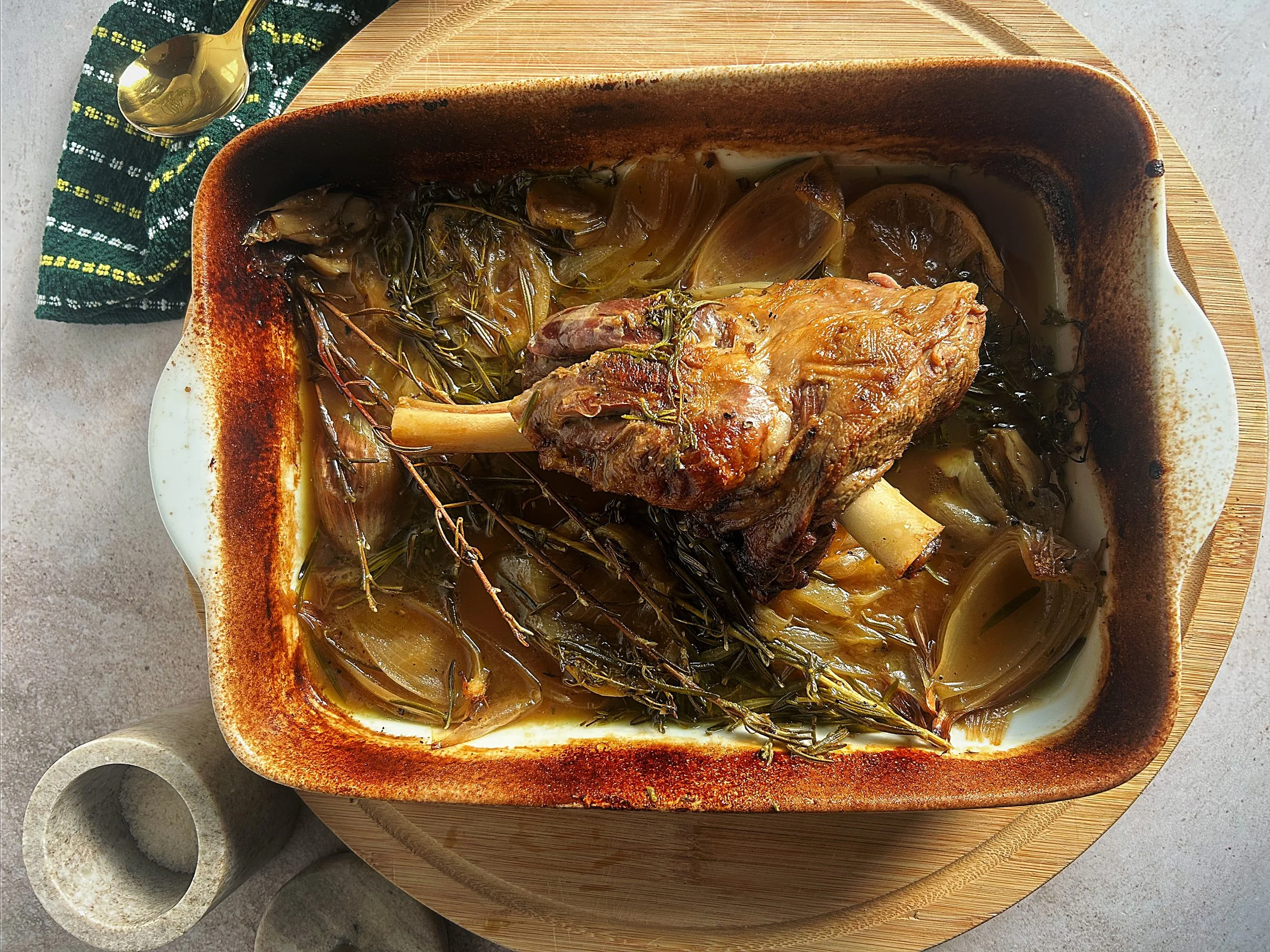
This version leans into brightness. Braised gently in white wine with garlic, fresh herbs, good stock, and plenty of lemon, the result is tender, fragrant, and surprisingly light.
It’s the kind of dish that feels generous without being overwhelming. Perfect for warmer days when you still want depth, but with freshness at the forefront.
BRAISING WITH WINE
Red wine brings tannin, structure, and darker fruit notes. When reduced over hours, it creates depth that feels bold, rich, and suited to colder weather.
White wine behaves differently.
It brings acidity, brightness, and a cleaner finish. As it cooks down, it enhances the natural sweetness of the onions and garlic while allowing herbs and citrus to shine.
The result is lighter in colour and flavour, but still deeply savoury.
INGREDIENTS
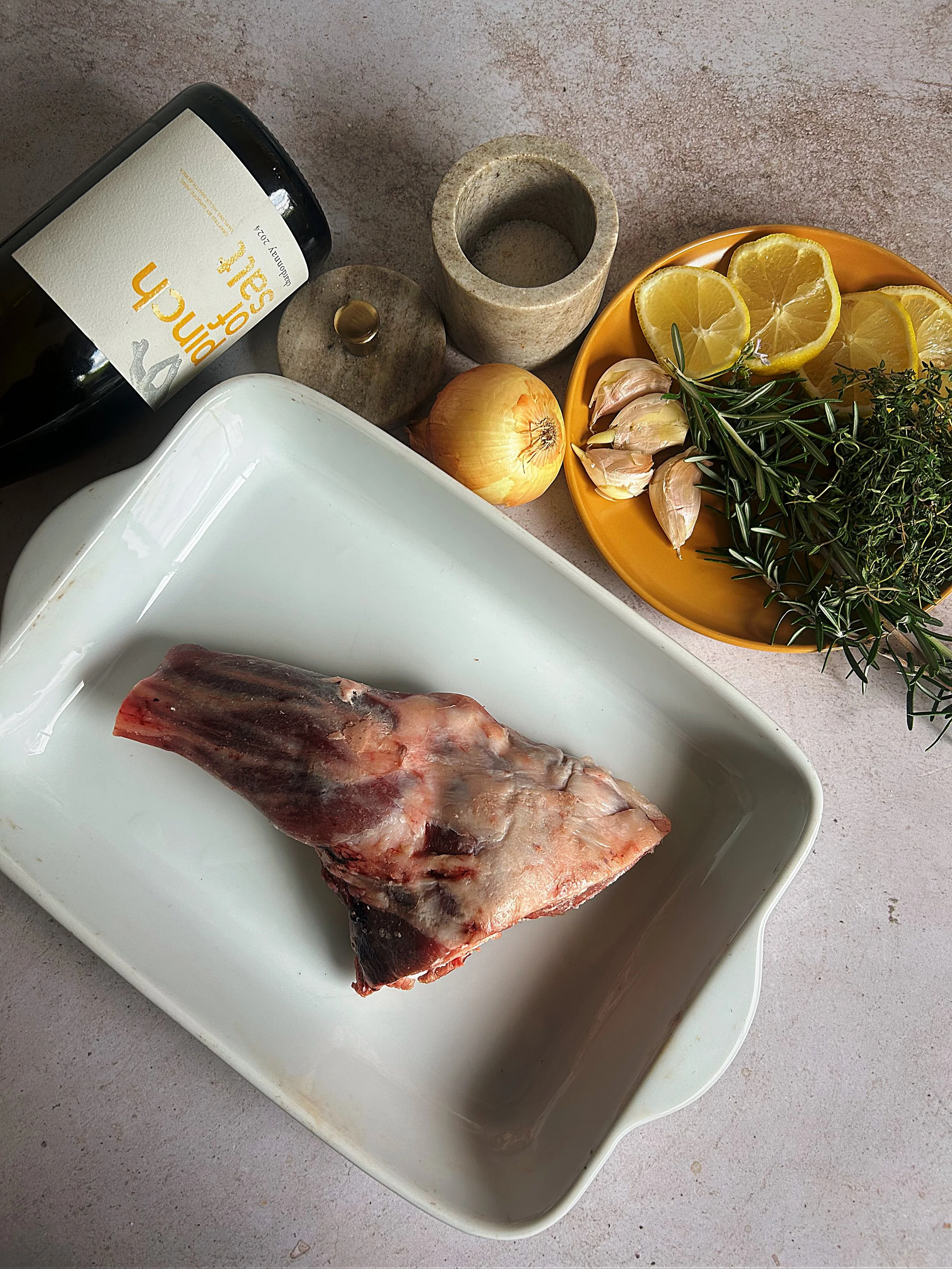
2 lamb shanks (Double the braising liquid if cooking more shanks.)
2 cups dry white wine (A Sauvignon Blanc or Chardonnay)
2 cups chicken stock
8 garlic cloves, lightly crushed
2 lemons, sliced
Handful of fresh rosemary and thyme
1 yellow onion, sliced into large chunks
Salt and freshly cracked black pepper, to taste
Canola oil, for searing
METHOD
Preheat the oven to 160°C.
Heat a generous drizzle of canola oil in a heavy pan over high heat. Season the lamb shanks with salt and pepper, then sear on all sides until deeply browned. This step builds flavour and colour.
In a baking dish, arrange the lemon slices, herbs, onion chunks, and garlic evenly across the base. Season generously with salt and pepper.
Place the browned lamb shanks on top.
Pour the white wine and chicken stock around (not over) the shanks.
Cover tightly with foil and braise in the oven for approximately 4 hours, or until the meat is tender and falling off the bone. Check periodically to ensure there is enough liquid, adding a little water if needed.
Once the lamb is cooked, carefully remove the shanks from the dish. Strain and transfer the braising liquid to a saucepan and reduce over medium heat until slightly thickened and intensified in flavour.
Spoon the reduced sauce over the lamb just before serving.
AT THE TABLE
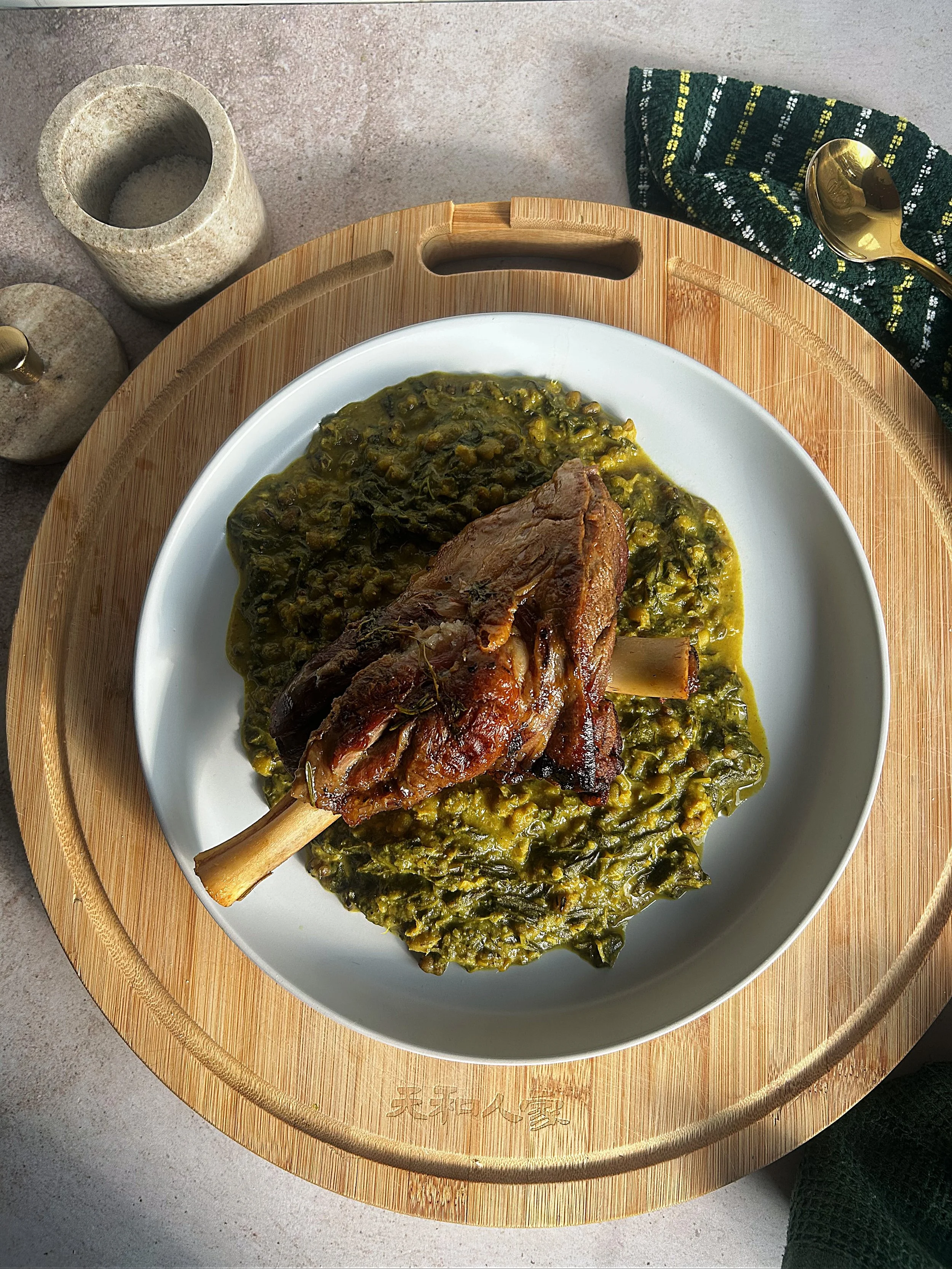
Because this braise leans bright and citrus-forward, it pairs beautifully with something creamy and grounding.
A soft bed of coconut mung beans, butter beans, or even a simple mash works well.
Something that can absorb the white wine and lemon sauce while balancing its acidity. Wilted greens alongside add freshness without overpowering the dish.
Love,
V